
Shipping faster without leaving your help center behind
Product updates can leave help articles and onboarding tours out of date. See how an AI assistant can reduce the work of keeping product guidance current.

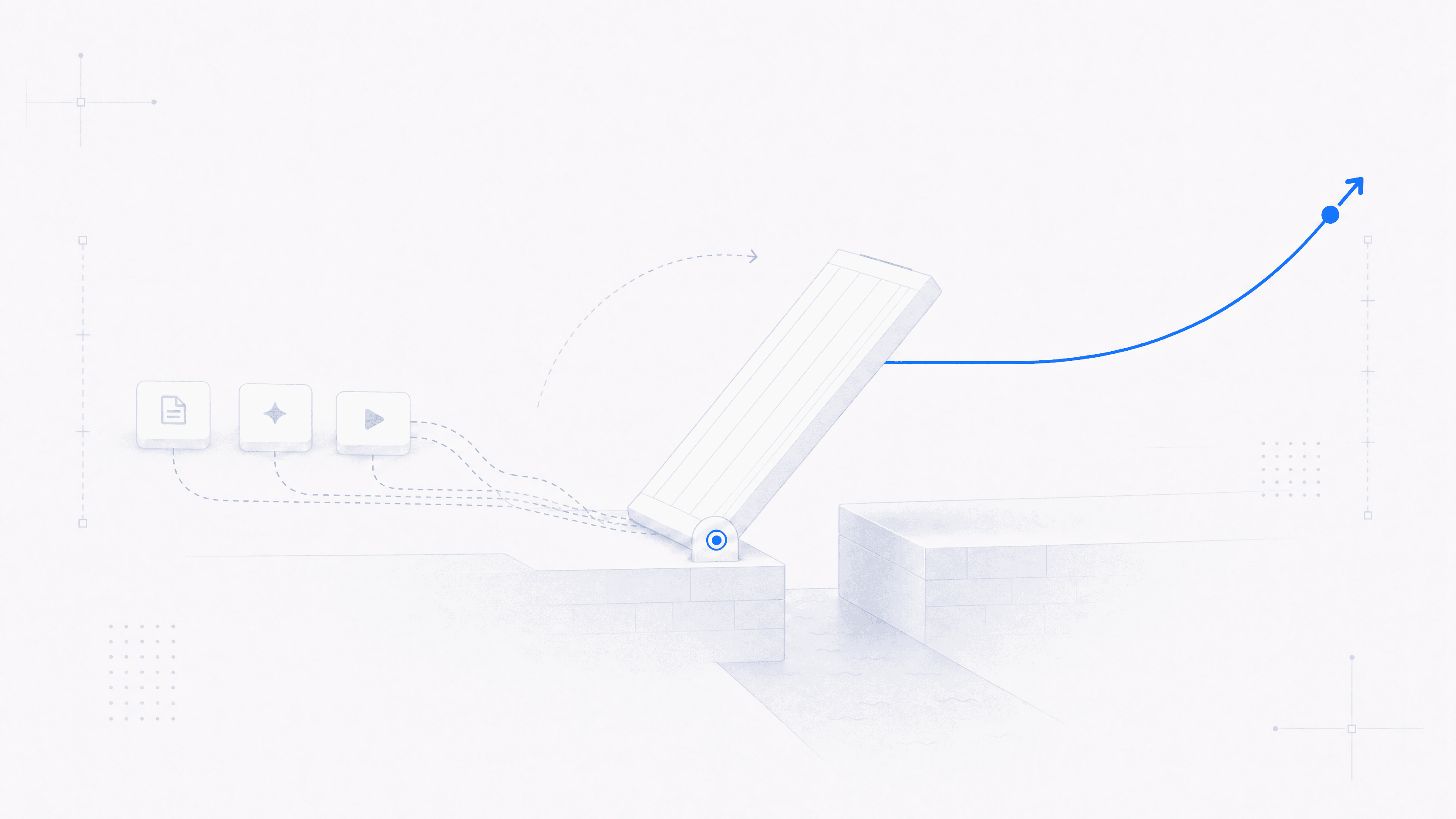
You move an export button into a new menu. The feature still works, but the help article and onboarding tour now send people to the wrong place.
It may be a better design. Until the guidance catches up, it's also another reason for someone to ask support where the button went.
For a SaaS team shipping frequent product updates, keeping those instructions current is recurring work. An AI assistant can help with it, provided the assistant has a way to learn what changed. Connecting a chatbot to the same old article won't fix the directions.
The work that follows a product update
The export button is a straightforward example. You can find the article, replace the screenshot, and correct the steps. If the same workflow appears in a sales demo or a customer onboarding email, those need a review too.
A permissions change takes more thought. The instructions might still work for an admin but fail for a teammate who can no longer see the button. Someone has to work out which experience the help content should describe, and how to explain the restriction.
Release checklists and regular content reviews are useful here. When you know which material a change affects, you can update it before shipping. The question is how much of that maintenance requires someone to go through the product and rewrite the click path by hand.
An AI assistant needs current product knowledge
If an assistant answers only from your knowledge base, its directions depend on what's in the articles. It can make the old instructions easier to find and read, but that doesn't tell it where the export button moved.
Frigade Assistant learns your product by using it. You give the agent access, and it works through the workflows. That gives it information about the interface it needs to guide people inside the product. It also uses your existing documentation for information that isn't available on screen.
As the product changes, the agent can relearn those workflows and update the knowledge behind its answers. The aim is to reduce how often your team has to rewrite navigation instructions just to keep in-app guidance working.
That still needs checking. A successful walkthrough before a release doesn't establish that the assistant has learned the new version. Test the changed workflow, including the roles and permissions your customers use, before relying on its updated guidance.
Keep the documentation that needs an explanation
There are good reasons to maintain a help center alongside an AI assistant. Someone evaluating your product may want to read about a workflow before they have an account. An existing customer may prefer a reference they can send to a colleague.
And some answers require information the interface doesn't contain. A billing policy needs to come from your team. A guide to choosing an account setup needs to explain the consequences of that choice, beyond where to click.
We want teams to spend less time replacing screenshots so they have more time for explanations that help customers make decisions. Product onboarding still needs that judgment, even when an agent can handle the navigation.
Start with a workflow you just changed
If you're evaluating an in-product AI assistant, give it a recent product change to learn. Pick a task that already generates support questions and ask someone to complete it with the assistant's help.
Watch where the guidance sends them. Try the task with a restricted account as well as an admin account. If the assistant can't finish, check whether it explains the limitation or keeps offering directions that don't work.
Then look at what your team had to do to get that result. If you still had to rewrite every step, the maintenance work remains. If the assistant learned the new path and you could verify it, you have a specific task it can take on after the next release.
Start there, and expand to other workflows as the results justify it.
Static onboarding tours break. The real cost of maintaining them in 2026.
A no-code product tour is cheap to build and expensive to keep. Here's the full picture of what those tours cost over time, and why the math has changed.
The freshness tax
Every help article, every onboarding tour, every demo script is a snapshot of a product that has already moved on. The cost compounds, and it's the line item nobody puts on a dashboard.
When an AI agent should refuse to answer
AI agents are wired to answer. The good ones know when to refuse. Why "I don't know" is the most expensive feature to build, and the one users trust most.