
Your product can't explain itself
Every in-app agent is guessing from documentation someone wrote after the fact. Today we're launching the Frigade Assist API, so the agent you already built can learn your product the way a user does.

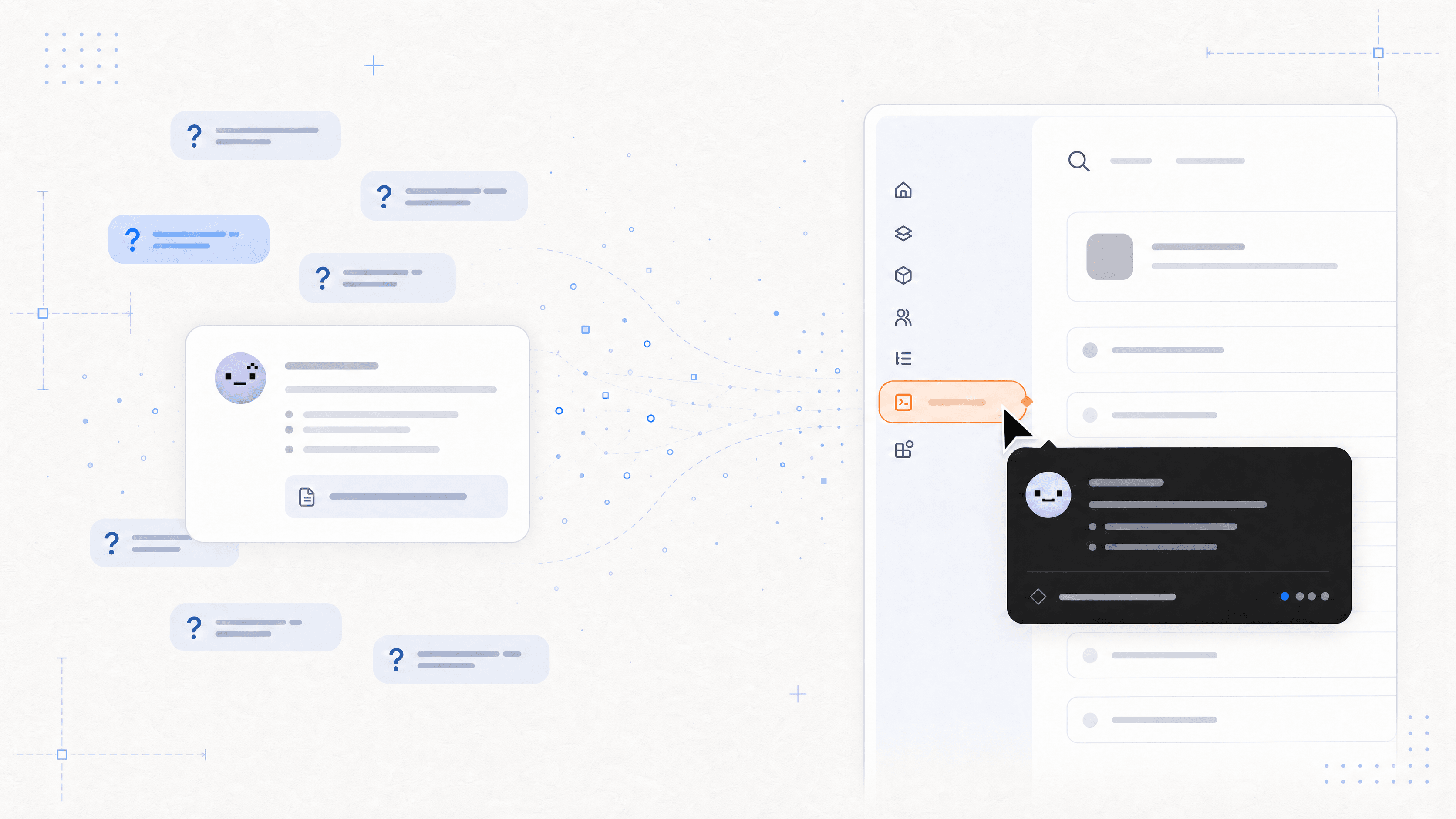
Today we're launching the Frigade Assist API. It turns the agent you already built into an expert in your product.
Ask the agent inside almost any product how that product works. Most of the time you get an old help center article linked back. Sometimes the agent even searches the web to find guides on how the software it is running inside of actually works.
The agent isn't the problem
It is easy to read that as a model failure, but the model is fine. It was handed your documentation and asked to be an expert on your actual product, and documentation lags by design. It's written after the product ships, and then the product keeps moving. We wrote about that at length in the help center was always a stopgap.
Every product is shipping an agent now, and the ones we see are wired to a knowledge base, because that is the most commonly available description of the product that exists in machine-readable form. So a generation of agents is being trained on a source that becomes stale the week it is written.
What we did instead
Frigade learns a product by working through it. A browser agent signs in with the same permissions a real user has, learns the real workflows, and builds a model of what the product does and how its parts connect. Nobody needs to manually click through or take screenshots. When you ship changes, Frigade learns the new flows and checks for changes, so it's always trained on the latest.
Getting that right took us longer than anything else we have built, and until now it only ran inside our own assistant.
That still works, and plenty of teams want it. But more and more teams are building agents of their own, and they do not want a separate agent competing for user attention. So we took the part of Frigade that learns your product and onboards your users, and made it something your agent can use.
What your agent gets
Register Frigade as one tool and your agent can do two things:
It can ask about your product and get an answer grounded in how the product behaves today, not how the help center described it five months ago.
Or it can run a walkthrough in context of the actual interface, from the page the user is already on, so somebody stuck gets shown rather than handed 5 paragraphs.
Every turn still routes through your agent, so it stays the only thing your users talk to.
Retell AI is building on it now. They build agents for a living, and they are still choosing to upgrade theirs with Frigade rather than build this themselves.
Who owns it after launch
Underneath the API is the platform we already run for our assistant customers, and you get it with the integration. Support and CX can see every conversation your agent handled through Frigade, correct a reply that landed badly, and steer how it responds, without engineering.
What an agent knows is a support asset, not a code asset. It should be editable by the people who answer customer questions for a living, not buried in a prompt file.
Your engineers get time back for the workflows that are actually unique to your roadmap.
Where this goes
The agent is turning into the way people get things done inside a product, not a support channel stapled to the edge of it. Nobody opens your product wanting to read about it. They want to finish what they came to do.
Your product cannot explain itself. With Frigade, it can.
The Frigade Assist API is available now. Reach out for a demo, and we'll show you what Frigade learns about your product.